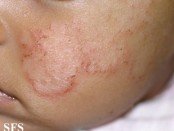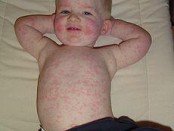
Many mothers panic when they discover that their newborn has a rash on the bottom, genitals and upper thighs. But diaper rash is very common. It is not usually a serious skin disorder and often resolves on its own with a few simple measures. However, there are instances where untreated and severe diaper rash can have serious consequences. But this is largely preventable. Diaper rash is not a poor reflection on the part of the mother, nanny or caregiver. Even the most conscientious mother may be unable to prevent diaper rash entirely. However, there are several ways to reduce the chances of your baby developing diaper rash and to help it resolve as soon as possible.
Children’s Health's Articles Archives
Achondroplasia
What is achondroplasia?
Achondroplasia, a bone growth disorder, is the most common cause of dwarfism. Achondroplasia means ‘absence of cartilage formation’. However, the defect in achondroplasia is not in the formation of the cartilage but is in the conversion of cartilage to bone (particularly the long bones). Achondroplasia may run in families or may result from a spontaneous mutation.
The average height of a man with achondroplasia is 52 inches (131 cm, or 4 foot 4 inches). A woman with achondroplasia reaches an average height of 49 inches (124 cm, or 4 foot 1 inch). The appearance of a person with achondroplasia is distinctive as they have a short height with disproportionately small limbs. The features of achondroplasia are apparent at birth. Achondroplasia can also be detected in the fetal stage.
Macrosomia (Big Baby Syndrome)
Macrosomia Definition
Macrosomia is the medical term for a baby that has a significantly higher birth weight than the average for newborns. The term is also known by the common term big baby syndrome. The other common term that overlaps with macrosomia is large for gestational age. Macrosomia is usually defined as a birth weight of more than 8 pounds 13 ounces (4 kilograms). It may also be defined by the gestational age which in turn is influenced partly by the gender of the newborn and ethnicity. Since male newborn babies are typically larger and heavier than females, macrosomia is more likely in male newborns. Overall, macrosomic babies are significantly larger compared to average infants.
Autism and Austism Spectrum Disorders (ASD)
What is autism?
Autism is a condition where there is impaired neurodevelopment to the extent that it affects communication, social interaction and intellectual development. A broad range of compromised behaviors related to abnormal brain development, are classified as autism or more correctly autism spectrum disorder (ASD). It becomes evident in childhood before the age of 3 years and persists through to adulthood. The overall cognitive functions are challenged in autistic children and the severity of symptoms determines the level of autism. Certain neurological conditions show symptoms common to autism like:
- Asperger Syndrome – show all signs of autism but have normal language development.
- Disintegrative disorder – a regressive condition where skills learned in early life are lost by the age of ten years.
Few studies suggest Rett syndrome as a form of autism but clinically, it is a completely different condition. Autistic children and adults deviate from what is considered be ‘normal human behavior’ but are often unusually gifted in certain aspects.
continue reading Autism and Austism Spectrum Disorders (ASD)
Hirschsprung Disease
What is Hirschsprung disease?
Hirschsprung is a birth defect where the nerves in the lower parts of the large bowels are missing thereby affecting normal bowel movement in these sections. The contents of the colon cannot be pushed along and becomes backed up thereby causing an obstruction in the bowel. Since the condition is present from birth, symptoms will be evident from the start of life. However, it can be missed in mild cases although these days most babies are diagnosed within the first 2 to 6 months of age. Hirschsprung disease may exist with many other types of birth defects such as Down syndrome. The bowel will need surgical repair at some point in life and can lead to severe complications which may even be life threatening.
Health Categories
- ABCD – First Aid: Injuries, Poisoning
- Addiction: Alcohol, Drugs, Smoking
- Allergies
- Blood and Immunity
- Bones, Joints, Muscles and Connective Tissue Diseases
- Cancer
- Children's Health
- Current Health Articles
- Diagnostic Procedures
- Ears, Nose and Throat
- Eyes and Vision
- Gastro-Intestinal Diseases
- Genetic Diseases
- Heart and Vessels
- Hormones and Metabolism
- Infections and Infestations
- Kidneys and Urinary Tract
- Liver and Gallbladder
- Lungs
- Medical Questions
- Medical Terminology
- Medication, Supplements
- Men's Health
- Mental Health
- Mouth and Teeth Diseases
- Neurological Diseases
- Nutrition
- Skin, Hair, Nails
- Sleep Related Disorders
- Surgery and Other Procedures
- Upper and Lower Limb
- Women's Health and Pregnancy