
Esophageal Ulcers (Esophagus Sores) and Strictures (Narrowing)
The esophagus or food pipe is the long tube that runs from the throat to the stomach. It has muscular walls with the inner mucosal lining secreting large amounts of mucus to lubricate food as it passes down to the stomach. The inner mucosa of the esophagus is constantly undergoing wear and tear with the passage of food and faces ongoing mechanical abrasion when hard and sharp foods like bones are eaten.
It also has to withstand chemical damage from drinking caustic substances (rare) or with the backward flow of stomach acid (common). It has thick inner lining known as the esophageal mucosa to withstand various forms on injury but this may become damaged, especially over the long term.
What is an esophageal ulcer?
An esophageal ulcer is an open sore that forms in the wall of the esophagus. The esophageal mucosa can withstand various insults and this may lead to inflammation of the wall of the esophagus. Eventually the mucosa becomes eroded.
The surface tissue is damaged and an opening to the deeper tissue develops. This is an ulcer. Although there are several possible causes of an esophageal ulcer, the prevalence of gastroesophageal reflux disease (GERD) is one of the leading causes of ulcers.
However, infectious factors particularly in a person with HIV/AIDS and other deficient immune states has increased the incidence of esophageal ulcers due to factors other than reflux. Overall esophageal ulcers are not as common as stomach ulcers and duodenal ulcers which are collectively termed peptic ulcer disease.
What is an esophageal stricture?
An esophageal stricture is an abnormal narrowing at some point in the esophagus. It can be due to inflammation or a growth in the esophageal wall protruding into the lumen (intrinsic), compression on the esophagus from a neighboring structure (extrinsic) or dysfunction of the esophageal wall muscle tone or activity (motor).
Narrowing of the esophagus may result in one of more of the following symptoms :
- Difficulty swallowing – dysphagia
- Painful swallowing – odynophagia
- Regurgitation of food
- Coughing during or after eating , at night
- Unintentional weight loss
Reasons for esophageal ulcers
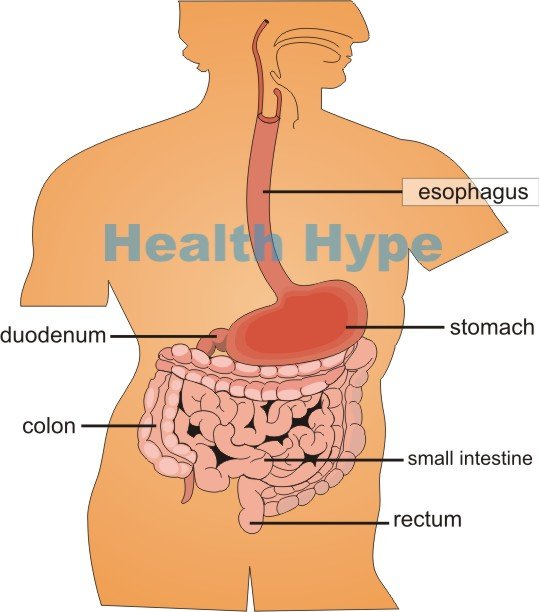
Normally the lower esophageal sphincter (LES) prevents backward flow of stomach contents into the esophagus. However, under certain circumstances stomach acid may enter into the lower part of the esophagus. Fortunately the esophagus has several mechanisms to withstand this acid for a short period of time.
- Thick mucosa lining the inside of the esophagus is able to withstand the acid for about 1 to 2 hours.
- Large amounts of alkaline saliva is released from the salivary glands and pass down into the esophagus to neutralize the acid.
- Rapid and forceful muscle contractions (peristaltic waves) pushes down any acidic stomach contents back towards the esophagus.
Stomach acid is not the only factor that can irritate the esophageal mucosa. It may also occur with infections. Initially this leads to inflammation of the esophageal wall – a condition known as esophagitis. With severe or constant irritation, an open sore may form in the esophageal wall. This is known as an esophageal ulcer.
Causes of esophageal ulcers
In order for ulceration to occur, the normally strong esophageal mucosa has to be damaged and eroded. This rarely happens within a short period of time. Apart from the various mechanisms discussed above that can protect the mucosa, particularly against the action of corrosives like stomach acid, the mucosa can also heal and regenerate rapidly similar to the mucosal lining in other parts of the gut. Esophageal ulcers develop after severe or prolonged esophagitis. Therefore the causes of esophageal ulcers are largely the same as the different types of esophagitis.
Reflux
Acid reflux is among the leading cause of esophageal ulcers. Prolonged reflux esophagitis causes ulcers develop. It is associated mainly with a weak lower esophageal sphincter (LES). Other factors that can cause acute reflux or aggravate chronic reflux includes :
- Alcohol
- Caffeinated beverages like coffee
- Cigarette smoking
- Certain drugs that weaken the LES
- Hiatal hernia
- Obesity
- Pregnancy
- Certain foods like chocolate
- Delayed gastric emptying
Infection
Infectious esophagitis with the subsequent development of esophageal ulcers may be caused by viruses, bacteria, fungi or parasites. In most cases these long term infections arise in a person with a weakened immune system like in HIV/AIDS and poorly controlled diabetes mellitus. The more common infectious agents include :
- Herpes simplex virus (HSV)
- Candida species (oroesophageal candidiasis)
- Cytomegalovirus (CMV)
The risk of esophageal candidiasis also increases with the recurrent use of broad spectrum antibiotics and chemotherapeutic agents. Various pathogenic microbes may infect and complicate pre-existing esophageal ulcers that developed due to other causes.
Medication
Pill-induced esophagitis, also known as medication esophagitis or drug-induced esophagitis, may arise with the use of certain medication. It occurs when these drugs make prolonged contact with the inner lining of the esophagus. Normally any substance that enters the esophagus rapidly passes into the stomach. However, if there is an underlying disorder like achalasia or esophageal strictures then the transit time into the stomach is slowed down drastically. Some of these medication may be absorbed but have systemic affects that leads to esophagitis and ulceration.
Drugs that are more likely to cause reflux esophagitis includes :
- Tetracyclines like doxycycline
- NSAIDs like aspirin
- Biphosphonate aldendronate for osteoporosis
- Potassium chloride
- Iron compounds
Chemicals
Certain chemicals, apart from medication, may also be responsible for esophagitis and ulceration. These corrosive substances are rarely ingested and may include :
- Strong acids or alkalis
- Industrial detergents
- Mechanical lubricants and oil additives
- Pesticides
Cancer and other diseases
There are various disorders which can compromise the esophageal mucosa and lead to esophagitis. It may progress to ulceration or other factors may contribute to the formation of ulcers in the compromised mucosa.
- Malignant tumors in the esophagus may erode the mucosa and lead to ulceration.
- Radiation exposure.
- Desquamative skin diseases that extend into the esophagus.
- Inflammatory bowel disease, specifically Crohn’s disease.
Signs and Symptoms
Esophageal ulcers may be asymptomatic or symptoms may be masked by the presence of other diseases of the esophagus like gastroesophageal reflux disease (GERD). Diagnostic investigation specifically an upper GI endoscopy may therefore be the only way to identify ulcers. Endoscopic examination allows for the ulcer to be visualized. See endoscopic pictures of esophageal ulcers. Reflux usually causes shallow streaks that are ulcerated while infection tends to cause deep punched-out ulcers.
Symptoms when present are usually non-specific meaning that it does not clearly indicate the presence of esophageal ulcers. Since most ulcers occur at the lower part of the esophagus and less frequently in the upper part, the symptoms may be confused with stomach or throat disorders respectively. Symptoms include :
- Heartburn
- Nausea and sometimes vomiting
- Indigestion
- Loss of appetite and eventually unintentional weight loss
- Upper abdominal pain
- Back pain
Melena, which is the black tarry stools due to degraded blood, and hemetemesis, which is the vomiting of blood, is more likely to occur with a bleeding ulcer.
Treatment of esophageal ulcers
The causative factor should be removed where possible. Treatment of esophageal ulcers is similar to peptic ulcer disease.
- Antibiotics and other antimicrobial agents to treat an infection.
- Acid suppressing drugs to reduce stomach acid production.
- Antacids to neutralize stomach acid.
This will allow the ulcer to heal. However, chronic GERD may not be so easily controlled and the risk of stomach acid exposure thereafter, even for short periods, can prevent the ulcer from healing. Therefore additional agents like sucralfate may be used to bind to the site of an ulcer thereby protecting it from stomach acid exposure. This allows the ulcer to heal over time.


