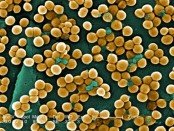
What Are Coagulase Negative Staphylococci (CNS)?

Staph bacteria are noted as coagulase negative, if they do not coagulate during coagulase enzyme test. All staphylococci causing disease in human, (except Staphylococcus aureus), are coagulase negative and include:

  • Staphylococcusepidermidis (by far the most common CNS)
  • S.saprophyticus
  • S.lungudensis
  • S.haemolyticus
  • S.hominis
  • S.cohnii
  • S.warneri

What Is Staphylococcus Epidermidis?

Staphylococcus epidermidis (staph epidermidis, S.epidermidis / epidermis) is a part of a normal skin flora, and it is often attached to the upper layer of the skin (epidermis) or mucosa, without causing any symptoms (staph epidermidis carrier state).

When the skin is injured (wounds, burns, intravenous drug addicts etc), Staphylococcus epidermidis may enter into deeper layers of the skin or even the blood and cause an infection.

Staphylococcus epidermidis is a gram positive, coagulase negative hemolytic. It grows in aerobic conditions, but also in anaerobic conditions (without air). It forms white colonies on blood agar.
continue reading Staphylococcus Epidermidis – Coagolase Negative Staphylococci