The color, odor and frequency of urination reflect the state of health of your kidneys and urinary tract, as well as the of the body as a whole. Urine has a slight ammonia odor although most of the time it is not prominent enough to smell it when urinating. Or at the most it is just slight odor. But for some people the >> Read More ...
Most of us do not give our urine much thought. A quick flush and it is disposed of and the story is over for at least the next few hours. The urine itself and urinary habits can serve as important signs of kidney and urinary tract problems. In fact, your urine can also tell you a lot about other aspects of your health >> Read More ...
A urinary tract infection, UTI, is a common problem especially among females. It can be effectively treated and complications are unlikely to occur if it is detected early and attended to promptly. While a UTI may be a once off episode, in many cases it tends to recur. The key is not only identifying the symptoms and >> Read More ...
Our kidneys are working all day and night to ensure that toxic substances and waste products are filtered from our body. It also regulates the amount of fluid in the body as well as the different minerals and salts that are essential for various processes. Although we can remain healthy even if we only have one kidney, >> Read More ...
Do you tend to pass urine a bit too often? It may in fact be a sign of certain diseases but many people experience urinary frequency even though there is no underlying problem. The cause of this urinary frequency may not necessarily be serious and poses little more than an inconvenience in having to visit the toilet many >> Read More ...
What is Radiation Cystitis? Radiation cystitis is condition where the bladder become inflamed because of exposure to radiation. It is rare for most people to be exposed to radiation for other than medical reasons. The bladder itself may be targeted in radiation therapy (radiotherapy) or the other pelvic organs may be >> Read More ...
Definition Hyperoxaluria is the term for high levels of oxalate in the urine. It is normal to pass oxalate in the urine but these levels are lower than 40mg (milligrams) per day. In hyperoxaluria the urinary oxalate levels exceed 40mg within a 24 hour period. The oxalate is produced within the body and/or sourced from >> Read More ...
What is lithium nephropathy? Lithium nephropathy is a kidney disease that occurs as a result of using lithium. Although trace amounts of lithium are present in the human body, it does not seem to serve any specific function. Lithium is used as a medication to treat certain psychiatric disorders and these patients are at >> Read More ...
What is pyonephrosis? Pyonephrosis is a condition where pus collects in the kidney as result of an infection with a urinary tract obstruction. A kidney infection, known as pyelonephritis, is mainly bacterial in origin. If the pus cannot drain out of the kidney due to some obstruction in the ureter usually, it accumulated >> Read More ...
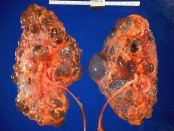
Polycystic Kidney Disease Definition Polycystic kidney disease (PKD) is a condition marked by the formation of cysts in the kidney. In some cases, the sac-like cysts can also be seen in the pancreas, liver, and spleen. It is one of the most common genetic disorders, running in the families and a common cause of kidney >> Read More ...