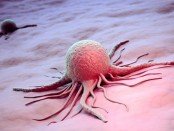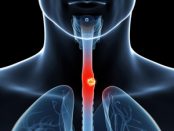
In secondary or metastatic lymph node cancer, cancer cells from a malignant tumor of a distant organ travel to the lymph nodes via the lymphatic or blood vessels and lodge within the lymph nodes, where they continue to proliferate. These cells, when examined under a microscope, are seen to resemble the cancer cells of the organ from where they originated.
Cancer's Tag Articles Archives
Secondary (Metastatic) Lymph Node Cancer
Primary Lymph Node Cancer (Lymphoma)
In primary lymph node cancer or lymphoma, the cells of the lymph nodes (lymphocytes) become cancerous resulting in abnormal and excessive proliferation or growth of the tissues and cells of the lymph nodes. This causes enlargement of lymph nodes in various parts of the body and these swollen lymph nodes are most often detected in the armpit, neck or groin as painless, hard swellings.
Lymphomas are usually restricted within the lymph nodes or other lymphatic tissue but may sometimes spread to other types of tissues in the body, where it is known as extranodal disease.
There are two types of lymphomas – Hodgkin’s lymphoma and non-Hodgkin lymphomas. The latter, non-Hodgkin lymphomas, includes all other lymphomas which are not Hodgkin’s lymphoma. These are further divided into five subtypes of Hodgkin’s lymphoma and about 30 subtypes of non-Hodgkin lymphoma based upon their microscopic appearance, genetic arrangement or extent of the disease process.
Lymph Node Cancer
There are two types of lymph node cancer – primary and secondary. When the cancer starts in a lymph node or spreads to it from adjacent lymph nodes it is known as primary lymph node cancer or a lymphoma. If the cancer originates in some other organ or tissue and then spreads to the lymph nodes it is known as secondary or metastatic lymph node cancer. Malignant lymph nodes may be felt as firm or hard, immobile (fixed) swollen lumps which are most often painless and may sometimes be matted together.
Primary lymph node cancer or lymphoma can be divided into two types – Hodgkin’s lymphoma and non-Hodgkin lymphoma. These lymphomas may be further divided into various sub-types.
The importance of secondary lymph node involvement in various types of cancer lies in the fact that it indicates spread of cancer away from the primary site as well as helping to determine the prognosis of the disease, chances of recurrence and the treatment plan.
continue reading Lymph Node Cancer
Characteristics of Benign and Malignant Tumors
What is a tumor?
The word tumor is a broad term to identify any growth within the body but has become synonymous with a benign or malignant growth. At times the word neoplasm is used which is essentially a new growth of tissue that has no purpose or function in the body.
A tumor arises from uncontrolled or an abnormal growth of cells that has no physiological function in the body, occupies space or destroys surrounding tissue to fit in the specific area and can affect the function or health of the organ it affects.
Tumors should not be confused with other growth phenomenon in the body like hyperplasia or hypertrophy. These terms are used when an organ enlarges or when there is an increase in the organ’s cells or layers of tissue than would be considered the norm leading to an increase in size of the affected organ. This enlargement is not a tumor.
continue reading Characteristics of Benign and Malignant Tumors
Skin Cancer – Causes and Risk Factors
Causes of Skin Cancers
The most common cause of skin cancers are ultraviolet (UV) rays, either from the sun, or from UV-emitting lamps, like those in tanning saloons. Both UV-A and UV-B rays may cause skin cancer.
Other possible causes of skin cancers include:
- A high dose or repeated X-ray exposure (1,2)
- Exposure to arsenic (pesticides, wood preservatives, miners, sheep shearers, farmers) (1), pitch (from distillation of wood or coal tar), creosote, or radium (5)
- Therapy that destroys immune cells – chemotherapy, radiotherapy, immunosuppression in organ or bone marrow transplantation (2)
- Smoking – increases risk of squamous cell carcinoma (4)
Types of Skin Cancer – Pictures and Treatment
Skin Cancer – General Characteristics
Skin cancers are malignant growths on the skin. They mostly arise from the upper layer of the skin – epidermis. Skin cancers may develop anywhere on the skin, including the scalp, lips or under-nail skin.
Skin cancers are most common after 50 years of age, but they may occur at any time.
Any chronic skin growth or discoloration that increases in size with time is suspicious for a skin cancer.
Skin Cancer Causes and Risk Factors
Common Types of Skin Cancer
There are three common types of skin cancer:
- Basal cell carcinoma
- Squamous cell carcinoma
- Melanoma
continue reading Types of Skin Cancer – Pictures and Treatment
Use of cell phone as a cause of cancer
“Cell phones and other electrical devices can cause cancer among the users” it has been a heated issue for a quite long time.
Origin of this concept
The origin of this widespread concept is those scientific studies that suggest a link between cell phones and brain cancer is found. Similarly, many lawsuits and news headlines show concerns about possible link between cell phones and cancer. Almost 30% American believe that a connection is found between cancer and cell phones.
There are some studies that suggest a link between the use of cell phone and some rare kinds of brain tumors but according to some other well-designed population studies no such link is found between cell phone use and brain tumor. It is not an easy task to conduct precise studies to know the risk factors for some rare cancers like brain cancer. The biggest hurdle in the way of precise study is the collection of reliable data. In this connection, those studies that gather information from healthy people about latent risk factors and then follow the cases for many years to observe which diseases development can be relied.
A Report on the Clinical Trial of CYT997, the Anti-Cancer Drug
In the first suite of Phase II clinical studies for its “vascular disrupting agent (VDA)”, “CYT997” the dosing of patients has been commenced by ‘Cytopia Limited’. The activity of this anti-cancer compound in specific cancer types which are highly unmet medical need and poor diagnosis will be investigated by these studies.
In the treatment of vascular tumors VDAs are a new class of drugs to treat cancer and have the potential for best sales. A dual action mechanism of CYT997 shuts down the established blood vessels that supply nutrients and oxygen to the tumor and also direct cyto-toxic properties. The compound was discovered by Cytopia scientists in 2003 can be administered orally as well as intravenously. To commence Phase I study an Investigational New Drug application was accepted by the US Food and Drug Administration in 2005.
Cytopia commences dosing in its first Phase II study, finalized preparations for its second Phase II study, concluded its first Phase I safety and tolerability study with intravenous administration and continued dose-escalation in its Phase I capsule dosing study during the 2008 financial year.
Clinical Programs
After the conclusion of its initial Phase I study ‘Cytopia’ commenced dosing in it first Phase II trial in patients with refractory or relapsed multiple myeloma in January 2008. An extensive body of preclinical studies including studies in cells from heavily pre-treated patients was followed by this clinical study. In this clinical study ‘CYT997’ established the significant anti-myeloma activity. The utility of the drug further is the main point of the Phase II studies in conventional solid tumors is extended by the potential activity of this compound in the multiple myeloma. Cytopia also aims to file an Orphan Drug Designation application in the US which gives development benefits including extended patent protection and increased regulatory consultation for this drug in multiple myeloma within 3 months.
continue reading A Report on the Clinical Trial of CYT997, the Anti-Cancer Drug
Human Monoclonal Antibodies Could Be Beneficial to Address Intractable Diseases
Identification of fully ‘human monoclonal antibodies’ against the intractable disease targets will be the main objective of a new research collaboration between ”Genmab” and “Pepscan Therapeutics”, the companies from Denmark and Netherland respectively.
Present technological set up has its own limitations with such identification and it has become more urgent to device new techniques to address the issue. It could be mainly due to the fact that the target proteins are deposited in a large quantity near the cell surface or within the cell membrane. There may be other reasons as well like the poor immunogenicity of the protein or the epitopes that are required.
Both the companies feel that the collaboration would facilitate detailed evaluation of the disease targets and it will help in addressing and evolving new standard treatments.
Monoclonal Antibodies against intractable targets are a significant unmet need. A combination of ‘Pepscan CLIPS protein mimicry platform’ and the ‘Genmab’s ability to generate fully ‘human monoclonal’ will enable the partners to develop innovative products for poorly served indications.
continue reading Human Monoclonal Antibodies Could Be Beneficial to Address Intractable Diseases
Bisphosphonates Work in Osteoporosis but Not Effective in Osteonecrosis
Almost 25 million Americans are affected with ‘Osteoporosis’ every year and 80% of these people are women, according to a recent report of the ‘National Osteoporosis Foundation’. This disease is mainly responsible for thinning of the bones and this may result in to hip fractures and spinal fractures in addition to some extreme complications leading to severe health problems, the report says.
The “Bisphosphonates (BF)” is the compounds that are generally prescribed for patients suffering with this kind of disorders.”Fosamax”, the ‘alendronate sodium compound’, is one such very popular class of drugs which helps in preventing bone fractures. In ‘Osteoporosis ‘patients who are also suffering from some cancerous disease, this drug prevents bone metastases and other related skeletal problems. The types of cancers may include multiple myeloma, metastatic breast cancer, and prostate cancer.
continue reading Bisphosphonates Work in Osteoporosis but Not Effective in Osteonecrosis
Categories
-
- ABCD – First Aid: Injuries, Poisoning
- Addiction: Alcohol, Drugs, Smoking
- Allergies
- Blood and Immunity
- Bones, Joints, Muscles and Connective Tissue Diseases
- Cancer
- Children's Health
- Current Health Articles
- Diagnostic Procedures
- Ears, Nose and Throat
- Eyes and Vision
- Gastro-Intestinal Diseases
- Genetic Diseases
- Heart and Vessels
- Hormones and Metabolism
- Infections
- Kidneys and Urinary Tract
- Liver and Gallbladder
- Lungs
- Medical Questions
- Medical Terminology
- Medications, Supplements
- Men's Health
- Mental Health
- Mouth and Teeth Diseases
- Neurological Diseases
- Nutrition
- Skin, Hair, Nails
- Sleep Related Disorders
- Women's Health and Pregnancy
Tags
- abdominal pain amenorrhea anaphylactic shock Arthritis belching and bloating bloating bowel bleeding breast cancer Cancer chest pain chronic diarrhea Depression Diabetes diarrhea flu folliculitis fructose malabsorption Health heart attack IBS Infection Iron itchy skin leg pain loose bowel movements lymphadenopathy lymph node swelling Medical Terminology mouth sores Obesity paresthesia pinched nerve pregnancy complications skin cancer skin rashes Sorbitol Staphylococcus aureus stomach pain sunscreen sweating swelling swollen swollen lymph nodes Type 2 Diabetes vaginal bleeding
Archives
Blogroll
Most Comments Post
- Leg Numbness, Tingling Feet and Toes (460)
- Arm Numbness, Tingling Hands and Fingers (410)
- Causes of Left Side Abdominal (Stomach) Pain (402)
- Human Intestinal Parasites - Symptoms and Treatment (262)
- Excessive Belching, Burping and Bloating - Causes and Treatment (249)
Featured Health Articles
- Folliculitis Pictures
- Staph Skin Infections
- Itchy Scalp - Pictures and Treatment
- Jock Itch - Pictures and Treatment
- Itchy Legs - Causes and Treatment
- Types of Skin Rashes - Terms Explained
- Types of Skin Cancer - Pictures and Treatment
- Head and Face Numbness
- Excessive Belching - Causes and Treatment
- Acrylic Nails - Health Problems