
Clotting Factors List, Functions, Blood Clot and Embolus
What is a blood clot?
A blood clot is a coagulated mass of blood cells and other blood components. It plugs any damaged area of the vessel wall and maintains the integrity of the blood vessel by preventing blood from leaking out. A host of factors come into play in blood clotting (coagulation). When an area of the vessel lining known as the endothelium is damaged, platelets in the blood attach to his area. It then attaches fibrinogen which are long fibers that help to form a mesh network. Fibrinogen is converted to fibrin by the action of the enzyme thrombin. The platelets adhere to each other to form a tight plug and the fibrin becomes tightly woven to form a clot (platelet plug).
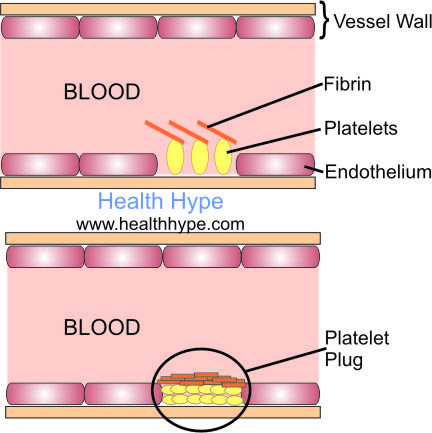
Once the damaged area is sealed, the lining of the vessel wall regrows and the clot dissolves. The integrity of the blood vessel is restored and there is no threat of losing blood at this site.
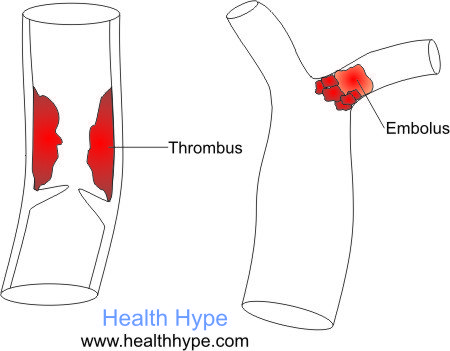
Sometimes a blood clot forms inside a vessel and continues to grow by trapping red and white blood cells, with further platelet aggregation and fibrin deposition. This affects the flow of blood in the vessel and can break off and lodge elsewhere in the vascular system (embolus). This is known as a thrombus. Technically, a thrombus is a blood clot but in thrombosis, the process of clotting goes beyond what is necessary to seal off a damaged vessel wall.
What are clotting factors?
The clotting factors are the group of chemicals that are constant circulation in the blood or present in tissues of the blood vessels. These compounds are responsible for the formation of a blood clot. Clotting factors are usually inactive but once there is tissue injury to the wall of the blood vessel, the first factor is activated. This has a cyclical effect with each factor activating the next. The ultimate aim is for these clotting factors to eventually convert the necessary components that will form a blood clot.
Functions of Clotting Factors
Hemostasis is the body’s mechanism to stop blood loss. It is made up of several mechanisms with the coagulation phase involving the clotting factors and the formation of a blood clot. The series of reactions whereby one clotting factor activates the next is known as the coagulation cascade. The clotting factors eventually convert fibrinogen to fibrin which then forms a mesh network at the site of injury. This traps blood cells and other components to form a firm blood clot and thereby completely stop blood loss. Therefore the function of clotting factors are to trigger the formation of a blood clot and stabilize it for as long as necessary. Clotting factors are therefore known as procoagulants.
List of Clotting Factors
Factor I
Name : Fibrinogen
Source : Liver
Pathway : Both extrinsic and intrinsic
Activator : Thrombin
Actions : When fibrinogen is converted into fibrin by thrombin, it forms long strands that compose the mesh network for clot formation.
Factor II
Name : Prothrombin
Source : Liver
Pathway : Both extrinsic and intrinsic
Activator : Prothrombin activator
Actions : Prothrombin is converted into thrombin which then activated fibrinogen into fibrin.
Factor III
Name : Thromboplastin / Tissue factor
Source : Platelets (intrinsic) and damaged endothelium (cells) lining the blood vessel (extrinsic).
Pathway : Both extrinsic and intrinsic
Activator : Injury to blood vessel
Action : Activates factor VII (VIIa).
Factor IV
Name : Calcium
Source : Bone and absorption from food in gastrointestinal tract
Pathway : Both extrinsic and intrinsic
Action : Works with many clotting factors for activation of the other clotting factors. These are called calcium-dependent steps.
Factor V
Name : Proaccerin / Labile factor / Ac-globulin (Ac-G)
Source : Liver and platelets
Pathway : Both extrinsic and intrinsic
Activator : Thrombin
Action : Works with Factor X to activate prothrombin (prothrombin activator).
Factor VII
Name : Proconvertin / Serum prothrombin conversion accelerator (SPCA) / stable factor
Source : Liver
Pathway : Extrinsic
Activator : Factor III (tissue factor)
Actions : Activates Factor X which works with other factors to convert prothrombin into thrombin.
Factor VIII
Name : Anti-hemoplytic factor / Antihemophilic factor (AHF) or globulin (AHG) / antihemophilic factor A
Source : Endothelium lining blood vessel and platelets (plug)
Pathway : Intrinsic
Activator : Thrombin
Actions : Works with Factor IX and calcium to activate Factor X.
Deficiency : Hemophilia A
Factor IX
Name : Christmas factor / Plasma thromboplastin component (PTC) / Antihemophilic factor B
Source : Liver
Pathway : Intrinsic
Activator : Factor XI and calcium
Actions : Works with Factor VIII and calcium to activate Factor X.
Deficiency : Hemophilia B
Factor X
Name : Stuart Prower factor / Stuart factor
Source : Liver
Pathway : Extrinsic and intrinsic
Activator : Factor VII (extrinsic) / Factor IX + Factor VIII + calcium (intrinsic)
Actions : Works with platelet phospholipids to convert prothrombin into thrombin. This reaction is made faster by activated Factor V.
Factor XI
Name : Plasma thromboplastin antecedent (PTA) / antihemophilic factor C
Source : Liver
Pathway : Intrinsic
Activator : Factor XII + prekallikrein and kininogen
Actions : Works with calcium to activate Factor IX.
Deficiency : Hemophilia C
Factor XII
Name : Hageman factor
Source : Liver
Pathway : Intrinsic
Activator : Contact with collagen in the torn wall of blood vessels
Actions : Works with prekallikrein and kininogen to activate Factor XI. Also activates plasmin which degrades clots.
Factor XIII
Name : Fibrin stabilizing factor
Source : Liver
Activator : Thrombin and calcium
Actions : Stabilizes the fibrin mesh network of a blood clot by helping fibrin strands to link to each other. Therefore it also helps to prevent fibrin breakdown (fibrinolysis).
Prekallikrein
Source : Liver
Pathway : Intrinsic
Actions : Works with kininogen and Factor XII to activate Factor XI.
Kininogen
Source : Liver
Pathway : Intrinsic
Actions : Works with prekallikrein and Factor XII to activate Factor XI.
What is an embolus?
An embolus (plural ~ emboli) is an undissolved, detached mass that travels through the bloodstream to other sites in the body. It may be a solid, liquid or gas. This process of breaking away from the original site and being transported through the circulation is known as embolism or embolization. Blood flow is disrupted almost entirely and there is a lack of oxygen which can lead to an infarction.
Causes of Embolism
In most cases, an embolus is a thrombus (blood clot inside the vessel) that breaks away from its original site and lodges elsewhere. This free moving blood clot gets impacted in a vessel that is usually smaller and may occlude the vessel partially or almost completely.
When a solid embolus like a thrombus lodges in another site of the vascular system, further clotting occurs as platelets and fibrin lodge on the sides of embolus and the surrounding endothelial lining. Blood cells also get trapped and this forms a tight plug around the embolus.
Other substances that may act as an embolus includes :
Artheromas
- Dislodged pieces of an atherosclerotic plaque which contain lipid debris.
Gas
- Air which may enter the vascular system during childbirth, abortion or injury to the lung or chest.
- Nitrogen which may enter the gaseous phase due to a sudden drop in pressure as seen in divers who ascend to the surface too rapidly (compression sickness).
Fat
- Small clumps of fat may enter the circulation after severe trauma or fractures.
Tumor
- Malignant tumors that enter the blood vessels or a few isolated cells may enter the circulation.
Foreign Bodies
- From pieces of a catheter, parasites like Schistosomes and its eggs.
Amniotic Fluid
- A rare condition where amniotic fluid containing fetal cells, hair or other debris may enter the uterine vein and act as emboli.
What happens to an embolus?
An embolus may result in reduced blood flow and diminished oxygen supply to an area resulting in hypoxia and tissue ischemia. If no immediate medical intervention is undertaken, this can lead to an infarct (tissue death).
An embolism may lodge in the pulmonary artery (pulmonary embolism) which may result in sudden death or cause the blockage of an artery supplying oxygen to the brain thereby resulting in a stroke (cerebrovascular accident or CVA).
References
- Hemostasis. BC Campus OpenEd
- How Blood Clots. MSD Manual
Last updated on September 5, 2018.


