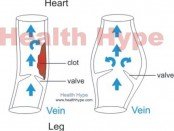
The veins in the leg carry low-oxygen blood laden with wastes and carbon dioxide back to the heart just as do other veins in the body. However, the leg veins are a bit different in structure from veins elsewhere in the body. This is due to the fact that the blood has to return back to the heart against the force of gravity >> Read More ...
What is forearm pain? Forearm pain is any discomfort, soreness or pain in the part of the arm lying between the elbow and wrist. It may occur on its own or be present with arm pain as a whole, elbow pain, wrist pain, hand and finger pain. The pain may only be present when moving the forearm, hands or fingers since many of >> Read More ...
The fingers are thin appendages at the end of the hand. Each digit is individually controlled by various muscles with a long tendons lying in the hand or forearm. Most of the finger is occupied by bone, tendons, ligaments with fascia and varying amounts of subcutaneous fat. There are no muscles in the fingers of despite >> Read More ...
What are the fingers? The human finger is a flexible, long and thin extension of the hand commonly referred to as the digits. The fingers on the hands correspond to the toes of the feet. Humans have five fingers on each hand and a significant feature in humans is the opposable thumb. Apart from the flexibility of the human >> Read More ...
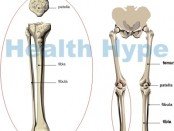
What is thigh pain? Thigh pain is any discomfort, soreness or pain in the area lying between the pelvis and knee. In most instances it is due to muscle and tendon pain, but can be associated with any disease or disorder of the ligaments, bone, joints, blood vessels or nerves in the thigh. Sometimes the problem may >> Read More ...
The term shin pain and shin splints are often used interchangeably with a preference for the term shin splints to describe any pain at the front of the lower leg. However, shin splint is a distinct problem and the most common cause of shin pain. It is associated with excessive force on the shinbone due to physical >> Read More ...
The lower limb is the area from the hip to the tip of the toes – pelvis, hip joints, buttocks, thighs, knees, lower legs, ankles, feet and toes . It is mainly composed of muscle and bone with a network of blood vessels, lymphatics and nerves supplying the area. The lower limbs bear most of the body weight with the >> Read More ...
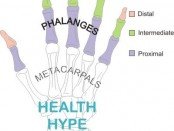
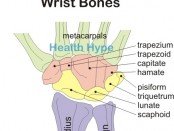
Joints are the flexible parts of the body that allow for various degree of movements between two or more bones. In order to understand the anatomy of the wrist and hand joints, it is first important to identify all the bones in this part of the upper limb. The bones of the forearm include the radius and ulna which extend >> Read More ...
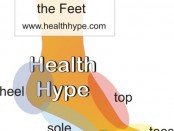
The hands and feet are the periphery of the body and therefore the surface temperature may often be lower particularly in colder environments. It is not an indication of the core body temperature – the temperature deep within the body’s tissues. Sometimes the hands and feet can be bit colder than the rest of >> Read More ...
The legs, particularly the lower leg and foot, are the most prone to circulatory problems due to its distance from the heart and the range of disorders that may arise within the long and extensive network of leg arteries and leg veins. This can therefore affect the flow of blood from the heart to the legs via the >> Read More ...